How Cinnamon Bears Solved the Cuban Missile Crisis
THE STORY
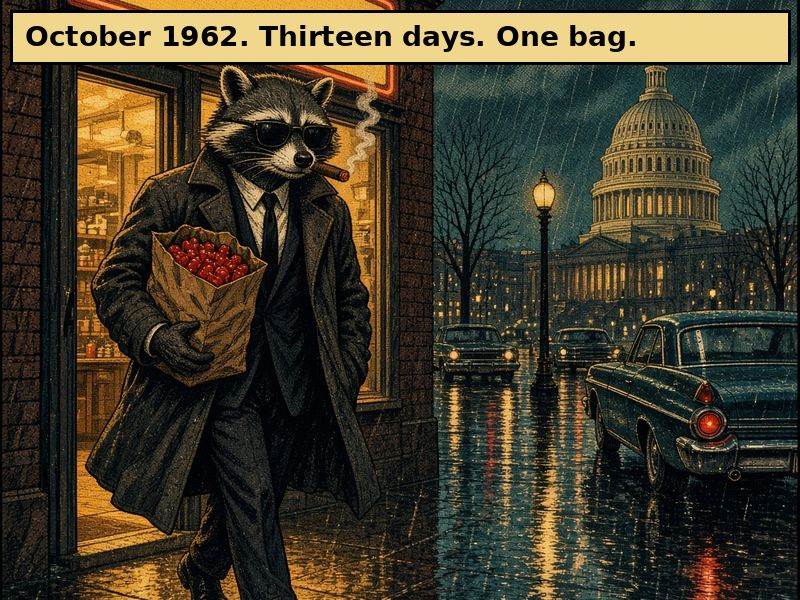
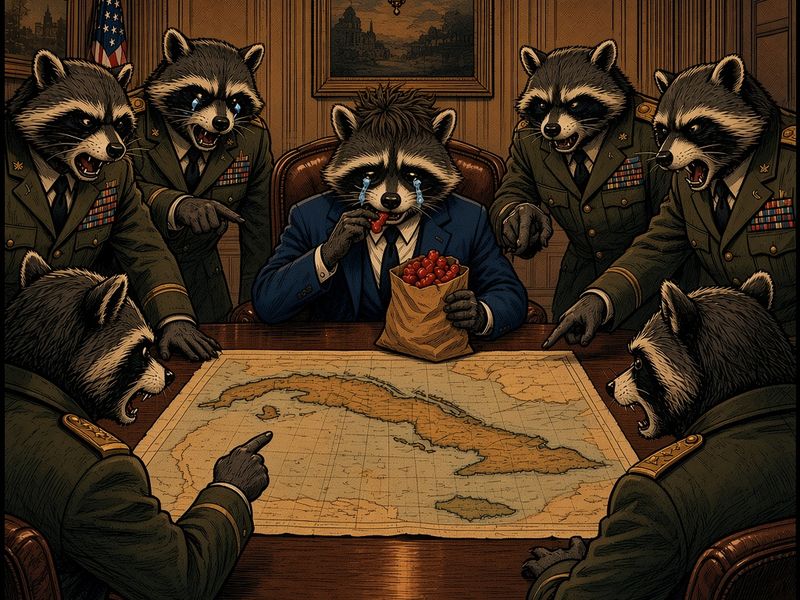
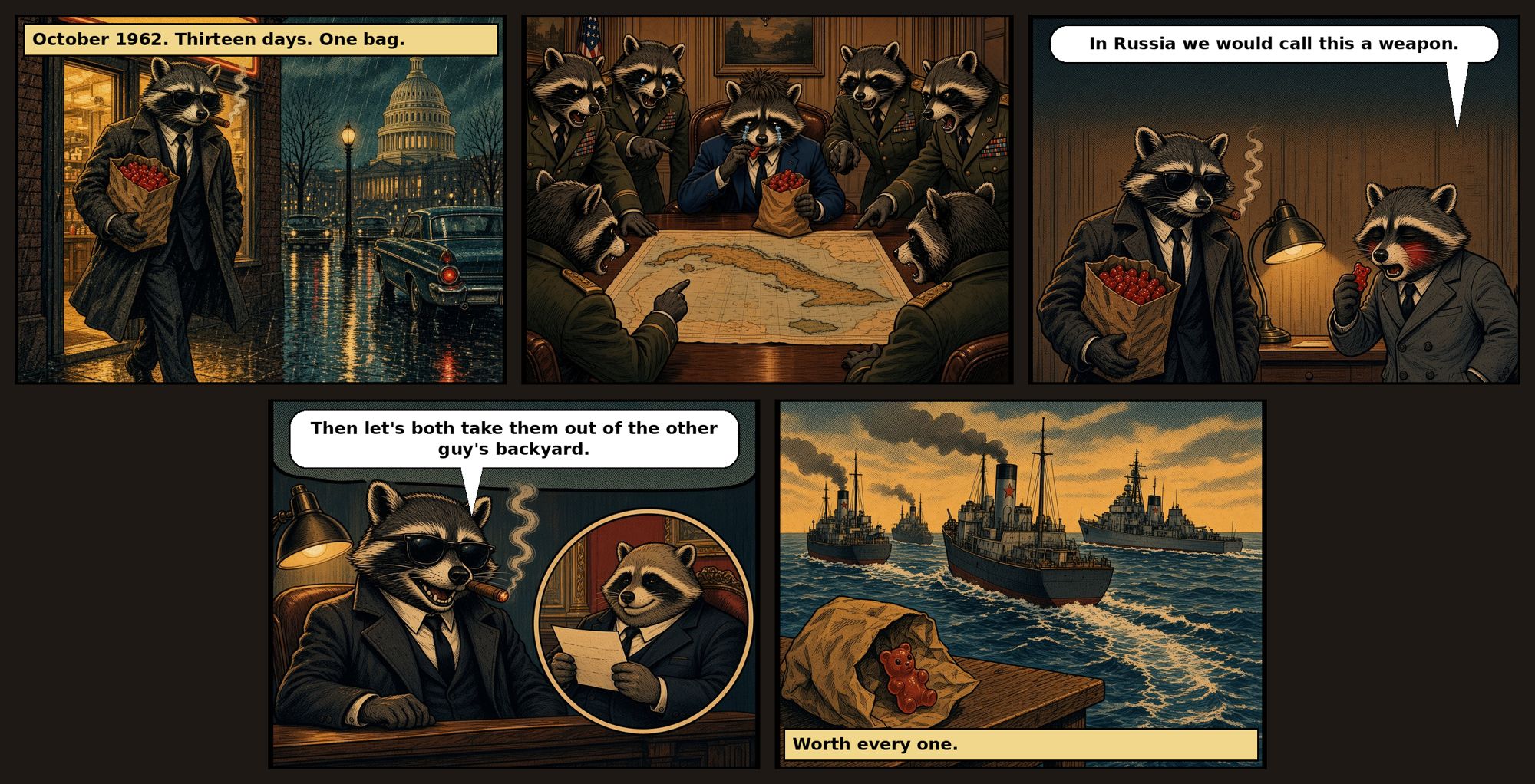
On the fourth night of October 1962, Robert Kennedy came out of the Justice Department carrying a paper sack from a Pennsylvania Avenue drugstore. He'd bought cinnamon bears, the little red gummies that burn going down, because his brother chewed through stress and the cigars were running out. In the Cabinet Room the Joint Chiefs pushed hard for air strikes on Cuba. President Kennedy didn't say a word. He just kept eating bears, one after another, until his eyes watered and he had to step out for air.
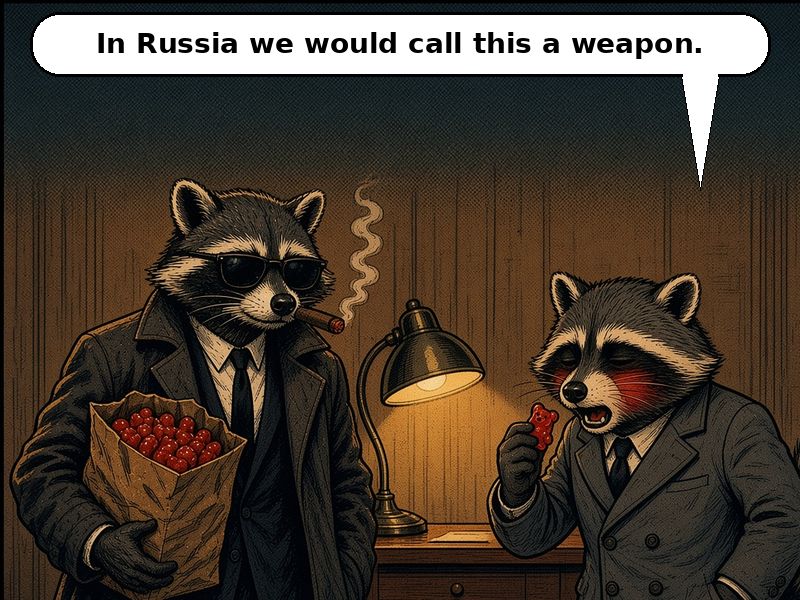
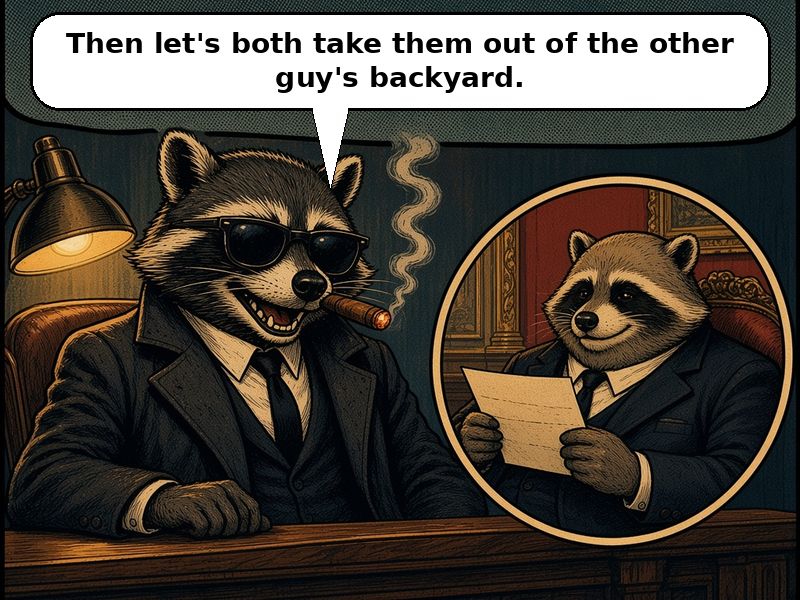
That same night the Soviet ambassador, Anatoly Dobrynin, came to Bobby's office for a secret meeting. Both men were exhausted and the talks kept stalling. Then Bobby put the sack on the desk between them, and Dobrynin took a bear out of politeness. He coughed and turned red, and for the first time in days he laughed. "In Russia," he said, wiping his eyes, "we would call this a weapon." Bobby grinned and said, "Then let's both agree to take them out of the other guy's backyard."
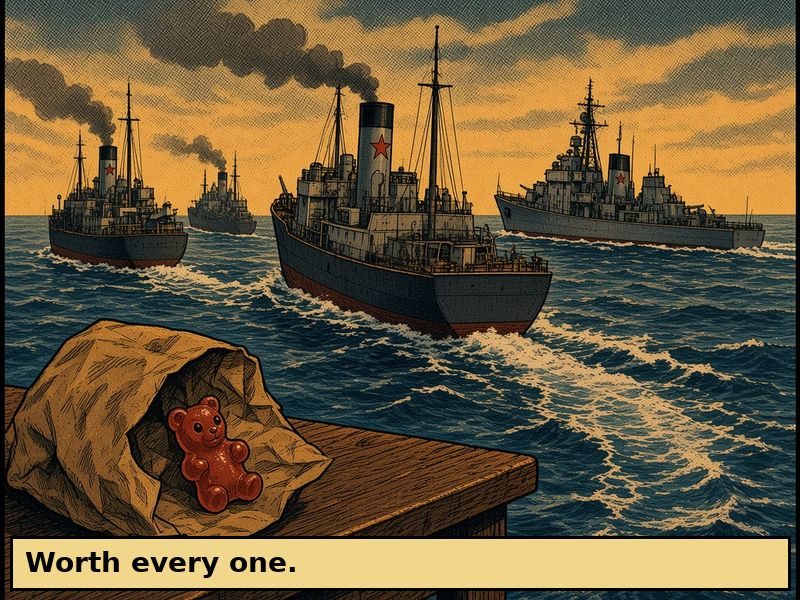
The line stuck. Dobrynin cabled Moscow that night and, against all protocol, mentioned "a fiery American candy, small but dangerous, best kept off the other's doorstep." Khrushchev read it and understood exactly what was being offered. If America would quietly pull its Jupiter missiles out of Turkey, the Soviets could pull theirs out of Cuba and save face, and everybody could walk away with burned tongues and nobody dead. Two days later the ships turned around.
The history books credit back channels, blockades and cool heads, and they're right. But in a drawer at the Kennedy Library, the story goes, there's a crumpled drugstore sack with a single red bear still inside. It's stuck to the paper, hard as a rock and sixty years old. A note in Bobby's handwriting is clipped to it: "Thirteen days. One bag. Worth every one."
THE COMIC